evan & biker parallels
this is something i haven't seen a lot of people talk about, but i think it's really fascinating :-) not sure exactly where to start, so i'll just dump all of the evidence i have here and string it all together into some kind of conclusion. yes, it's messy, but so is my brain!!!
the first logical thing for me to mention is how they subvert the typical formula for combat in hotline miami. evan's subversion is obvious: his default state is pacifism, and he can't use any weapons that are definitively lethal like guns and knives. this does not mean, however, that he is incapable of violence. one of his most notable traits is his rage mode, which can be activated at any time during all of his levels.
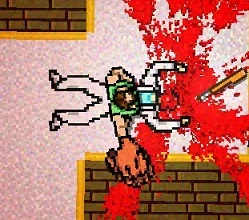
biker's subversion is a little more subtle. the most noticeable difference is that biker is restricted to melee with only three throwing knives for range. beyond combat, though, he actually has the most options to spare people out of any other playable character besides evan.
the routine for hotline miami gameplay, as established by jacket, is that the entire level must be cleared of all available enemies, with only two notable exceptions (the girl and richter). biker does not follow this routine. he is not obligated or sometimes even prompted to kill the man wearing the aubrey mask, the technician at the blue dragon, the entire staff of phonehom (besides the man next to the computer), or the janitors at the end of the game. his dialogue during the fight with jacket differs as well, because from his perspective, he offered jacket a chance to escape. this does not align with the personality that we have been introduced to biker with: that of a thrillseeking serial murderer who kills just for fun/sport.
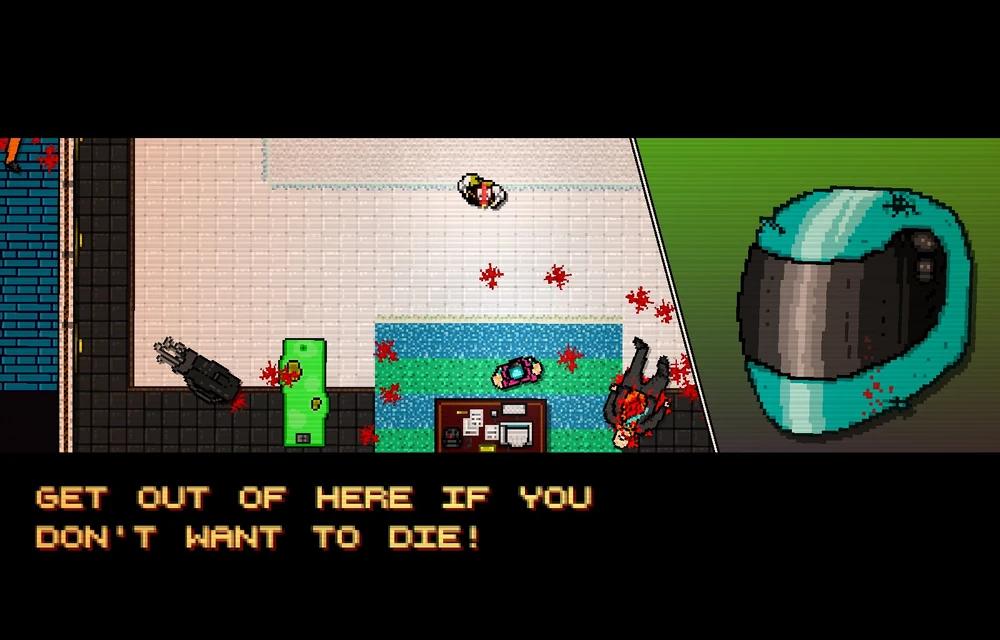
this disconnect with the established personality is also observable in evan. he is not an outwardly violent or angry person, yet he still has a rage mode. evan's inconsistent morality is compelling enough that my next entry here will probably be entirely about him lmao!!
another point connecting them is the fact that evan and biker are the only two playable characters who have story beats defined by user-input. in biker's case, there's the generic ending of the first game, in which the player has to select dialogue options for him, something hotline miami never does ever again. as for evan, in the cutscene after release, the player can make a choice between calling evan's wife or going to the typewriter to continue the book, which does affect the ending of the game. this is the most control we see from any character in the game.
this theme of making choices ties into my last point, because both rage mode and biker's sparing are deliberate choices made by the player. which begs the question, why are biker and evan specifically given this privilege when nobody else is?
it has to do with the subject of their stories. both of their plotlines revolve around uncovering the truth about 50 blessings, to varying degrees of success. this desire to know more, the actual care and consideration they both share to observe their surroundings, is what allows them the privilege of making their own decisions. every other character in hotline miami are, to put it bluntly, drones for their ideology. they follow the same patterns as their peers or predesecessors, (e.g. the fans imitating jacket, the son hoping to live up to his father's name, jake's obedience for 50 blessings) and never make a choice for themselves as a result. even for typically good-aligned characters like beard and richter, they don't study the situations that they're in all that closely. they believe their fate has already been decided for them, and so, it has been.
we know, as an audience, that evan and biker don't have happy endings. but they're happier than most. most of the other characters die tragically alone, or when they're at their absolute lowest. but biker's death is left ambiguous, and evan either dies with his loving family or watched by an audience of captivated fans. that's more hope and closure than we ever see in this bleak universe. in this case, i think it's fair to say that their self-awareness is rewarded by the narrative.
and that's kind of the message of hotline miami, isn't it? the follow-up question to do you like hurting other people is why? if you can't explain yourself, if you can't think for yourself, then are you really living at all? what's the point of doing anything at all if there's no real motivation behind it? the characters in hotline miami are led by fear, by helplessness, by blind and violent rage. biker and evan see 50 blessings, and the ultraviolence spawned by it, for what it is: a front for something much larger. and they make the executive choice to do something about it.
so uh. yeah. these are my two cents and i hope this was a fun or interesting piece of writing for you to read. next on the agenda: whatever makes me so excited to the point of nausea!